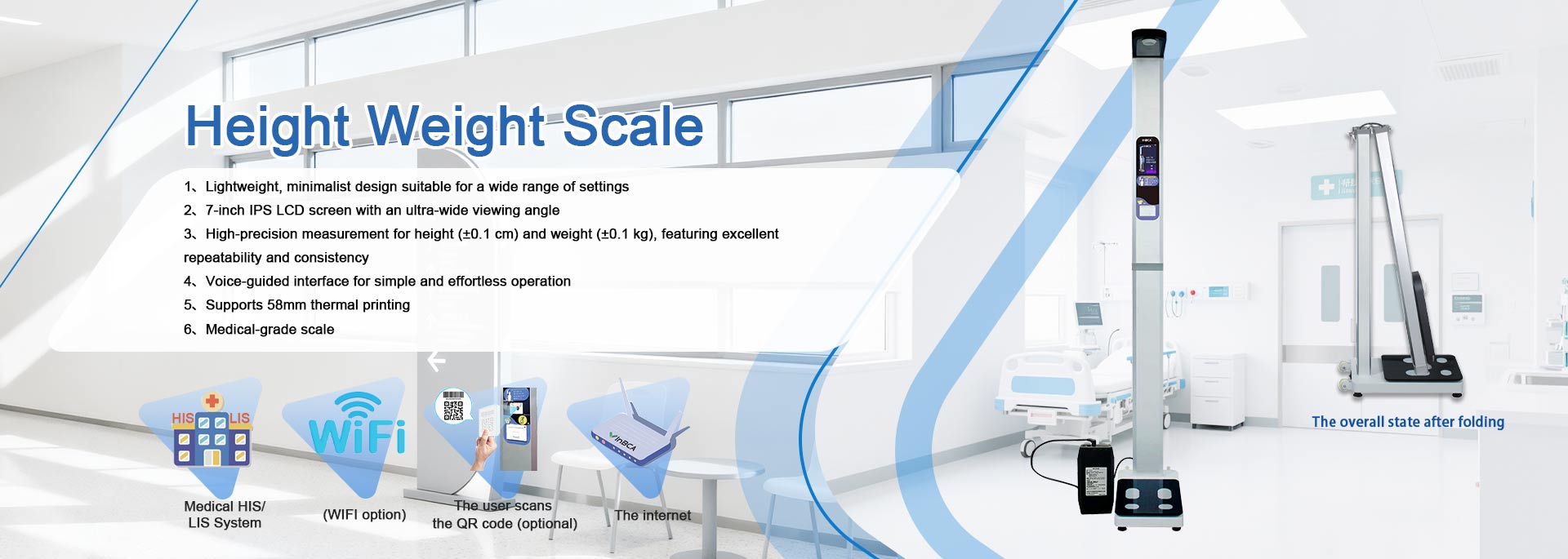
In the fast-paced rhythm of modern life, health management has increasingly become a central focus of public attention. Yet, the foundation of all health management lies in the accurate mastery of one's basic physiological data. The height and weight scale—a device that may appear deceptively simple—serves as the very first key to unlocking a scientifically grounded, healthy lifestyle. It is not merely a measurement tool, but rather your personal "health steward."
Thanks to its convenience and practicality, the height and weight scale plays a pivotal role across a wide range of settings.
**Home Health:** For households with elderly members, expectant mothers, or growing children, the regular monitoring of height and weight fluctuations is absolutely vital. A home-use height and weight scale enables parents to track their children's growth curves, while also alerting middle-aged and elderly individuals to abnormal weight fluctuations—potential indicators of conditions such as edema or malnutrition.
**Medical Institutions:** In hospital physical examination departments and community health service centers, medical-grade height and weight scales are considered essential equipment for basic health screenings. These devices typically boast superior precision and stability, and often feature voice broadcasting and thermal printing capabilities to facilitate rapid data collection by medical staff.
**Gyms and Health Management Centers:** Tracking changes in body weight and composition—both before and after each workout session—serves as a critical reference point for evaluating training efficacy and formulating personalized nutrition plans. Smart height and weight scales can generate professional reports, thereby empowering fitness coaches to provide more scientifically informed guidance.
**Schools and Public Services:** Schools conduct annual health checkups for primary and secondary students; the standardized measurement of height and weight during these screenings aids in identifying potential issues such as growth retardation or obesity, thereby providing the necessary data support for targeted physical health interventions.