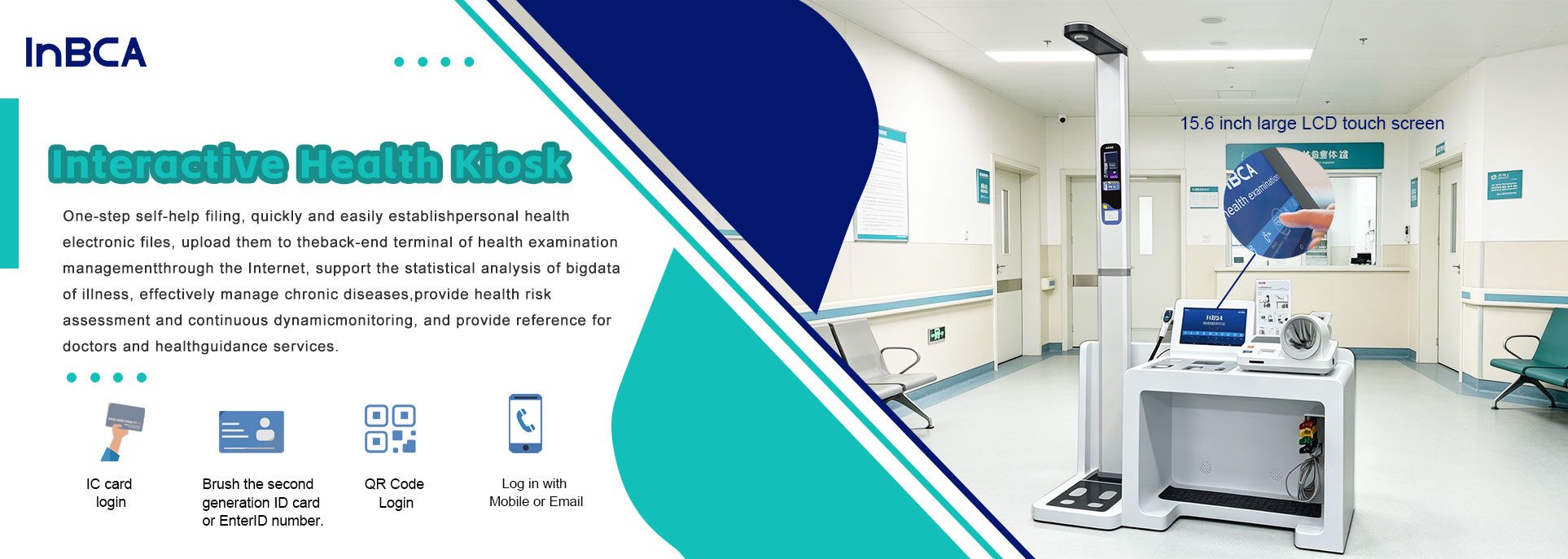
Driven by the wave of digital transformation, the healthcare sector is undergoing profound change. Against a backdrop of aging populations, rising chronic disease prevalence, and uneven distribution of quality medical resources, the traditional model of "queue – register – see a doctor – undergo tests" can no longer meet the public's demand for immediate, convenient health management. In this context, the Interactive Health Kiosk has emerged as a critical node connecting personal daily health management with professional medical services.
1. What is an Interactive Health Kiosk?
An Interactive Health Kiosk is an intelligent device that integrates IoT sensing technology, artificial intelligence algorithms, cloud computing, and multimodal interaction interfaces. It is typically deployed in public locations such as community centers, pharmacies, corporate office buildings, airports, schools, and primary healthcare facilities.
Unlike traditional standalone blood pressure monitors or height-weight scales, this type of kiosk functions as a "micro check‑up station." Users simply interact with the touchscreen, voice interface, or facial recognition, and within minutes they can complete measurements of multiple physiological parameters and receive real-time health analysis and risk alerts.
2. Core Functional Modules
Modern interactive health kiosks generally include the following five core capabilities:
-
Basic Vital Signs Monitoring
-
Blood pressure, blood oxygen, body temperature, body fat percentage, heart rate, and ECG (single‑lead or multi‑lead).
-
Height, weight, and automatic BMI calculation.
-
-
Specialized Risk Assessment
-
Assessment of vascular elasticity (arteriosclerosis risk) via bioelectrical impedance or photoplethysmography.
-
AI‑assisted facial or tongue diagnosis for traditional Chinese medicine constitution identification.
-
Interactive completion of mental health self‑assessment scales.
-
-
Cloud Data Synchronization
-
Measurement results are pushed in real time to the user's mobile app or WeChat, creating a personal health record.
-
With user authorization, data can be linked to regional health information platforms, family doctor contract systems, or corporate health management systems.
-
-
Intelligent Triage & Symptom Checker
-
Symptom self‑assessment based on large language models, with recommendations on which department to consult.
-
Connection to internet hospitals for text/video follow‑up consultations and electronic prescription transfer.
-
-
Interactive Health Education
-
Personalized diet and exercise suggestions based on measurement results.
-
Authoritative science videos with voice search capability for health topics.
-