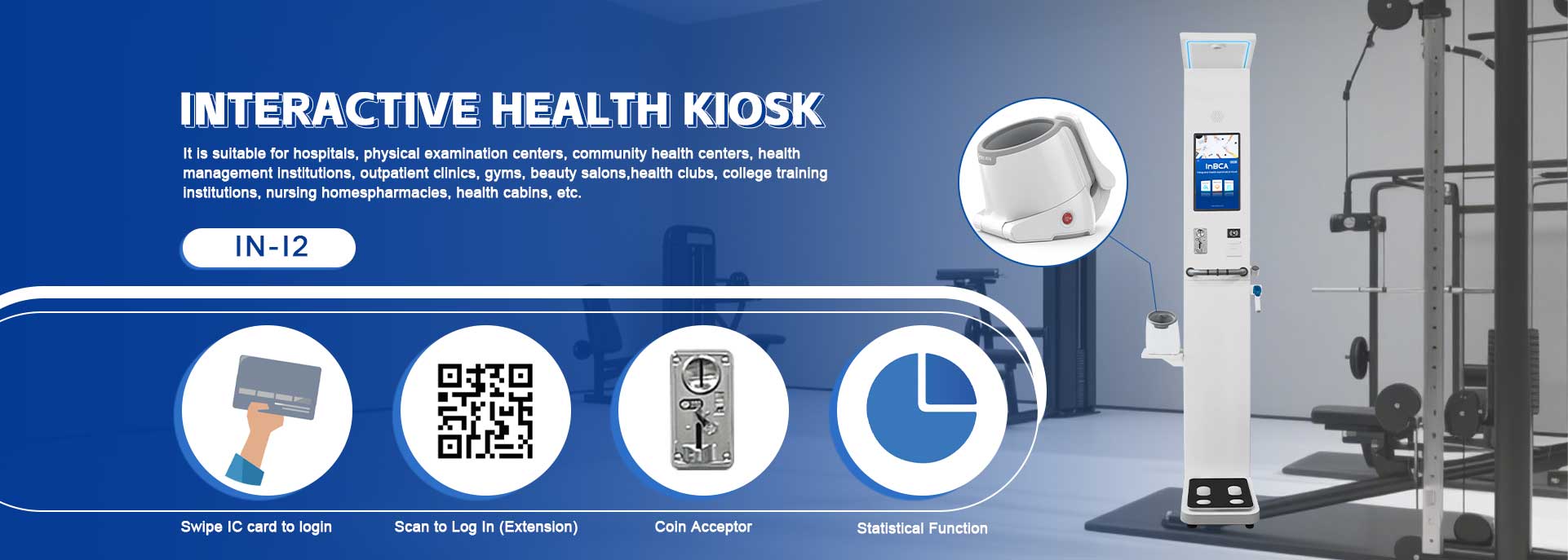
Guided by the "Healthy China" strategy, healthcare services are undergoing a profound transformation from a "disease-centered" approach to a "people-centered" one. As the physical entry point and data node of this transformation, the Interactive Health Kiosk is being quietly deployed in hospitals, communities, villages, and even homes, becoming a key "peripheral nerve" for building a full-life-cycle health management system for all citizens.
It is no longer just a piece of physical examination equipment, but an "intelligent health brain" integrating Internet of Things (IoT) sensing, big data analytics, and artificial intelligence (AI) assistance.
I. One-Stop Testing: From Fragmented Visits to Integrated Solutions
Traditional health testing often involves cumbersome procedures: registration, queuing, and fragmented tests. Modern health information workstations (such as models like IN-E3) have completely changed this paradigm through high integration.
A standard workstation typically integrates:
-
Basic Vital Signs Monitoring: Tunnel-style electronic blood pressure monitors, blood oxygen sensors, thermometers, ECG modules, etc., allowing residents to complete basic screenings within minutes.
-
Body Composition Analysis: Using bioelectrical impedance analysis (BIA) technology to accurately measure body fat percentage, muscle mass, and visceral fat level, providing a basis for weight management and chronic disease prevention.
-
Expanded Testing Capabilities: Some high-end models support biochemical indicator testing (e.g., blood glucose, uric acid, cholesterol) and even integrate ECG monitoring to meet the needs of primary-level public health screenings.
The core value of this "one-stop" service lies in speed and integration. Residents need only one authentication (via ID card, medical insurance card, or electronic health code) to complete all tests. The system guides the user with voice prompts, and data is automatically collected and uploaded, eliminating the tediousness and errors of manual entry.