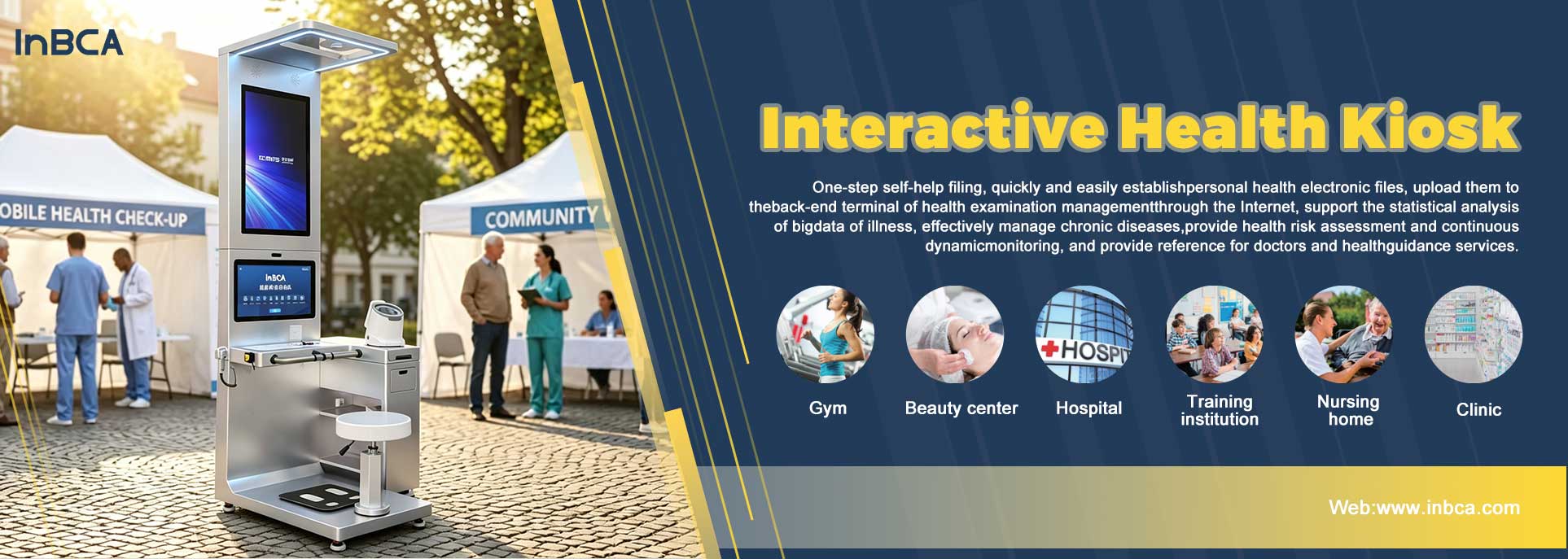
The Interactive Health Kiosk is an intelligent public health service device integrating self-service file creation, physical examination, cloud data management and chronic disease monitoring. Developed for diversified health scenarios, it covers the full workflow of personal health data collection, storage, analysis and health guidance.
Equipped with integrated detection modules and a dual-screen interactive system, the kiosk supports self-testing of core physical indicators including height, weight, blood pressure and body composition. Users can create their personal electronic health records in just one simple step. All test data is uploaded to the back-end health management terminal via the Internet in real time. Supported by big data computing for statistical analysis of health conditions, the device enables long-term and effective chronic disease management.
The system generates professional health risk assessment reports, tracks physical indicators dynamically over time, and stores all records as reliable references for physicians. It also provides supporting services including online health popularization and customized conditioning programs, making routine basic health examinations accessible, independent and regular for all people.
2. Wide Application Scenarios
This health kiosk fits the health service demands of various industries, applicable to the following sites:
- Gyms: Track body fat and basic physical signs for fitness enthusiasts, supporting customized weight loss and body shaping plans;
- Beauty Centers: Formulate internal conditioning and external skincare regimens based on users’ basic health data;
- Hospitals: Serve as self-check pre-screen stations for outpatient and community branches, complete continuous resident health files and assist chronic disease follow-ups;
- Training Institutions & Universities: Conduct preliminary annual physical screenings for teachers and students, and build campus health databases;
- Nursing Homes: Monitor seniors’ blood pressure and weight around the clock to give early warnings of cardiovascular and cerebrovascular risks;
- Clinics: Alleviate workforce shortages at primary medical facilities and enable daily self-health screenings for residents.
3. Core Advantages
- -Efficient Self-service, Streamlined Health Filing Process
Eliminate complicated registration of traditional paper medical records. The full touchscreen self-operation system finishes record creation and complete physical tests within minutes, greatly cutting manual data entry workload for medical institutions.
- -Cloud Big Data for Refined Chronic Disease Management
Massive resident health data is stored uniformly on the cloud. The system automatically sorts and analyzes chronic disease incidence trends and indicator fluctuation patterns, delivering accurate data for public health research and chronic disease intervention.
- -Universal Compatibility for Inclusive Public Health
With an integrated, compact structure, the kiosk requires minimal floor space and no full-time on-site staff. It can be flexibly deployed in hospitals, senior care facilities, campuses and commercial wellness venues, removing geographical and time barriers to health checks.
- -Interconnected Medical & Examination Data for Scientific Diagnosis
All test reports are archived in standardized formats. Doctors can access long-term dynamic health records instead of relying on one-off examination results, so as to deliver diagnosis and wellness advice tailored to individual physical conditions.
Against the backdrop of national public health improvement, the InBCA Interactive Health Kiosk brings intelligent technology down to grassroots health services. It bridges health data gaps between households, communities and medical institutions, acting as a solid hardware foundation for the digital transformation of public health, and shifting health management mode from "passive medical treatment" to "active regular monitoring".