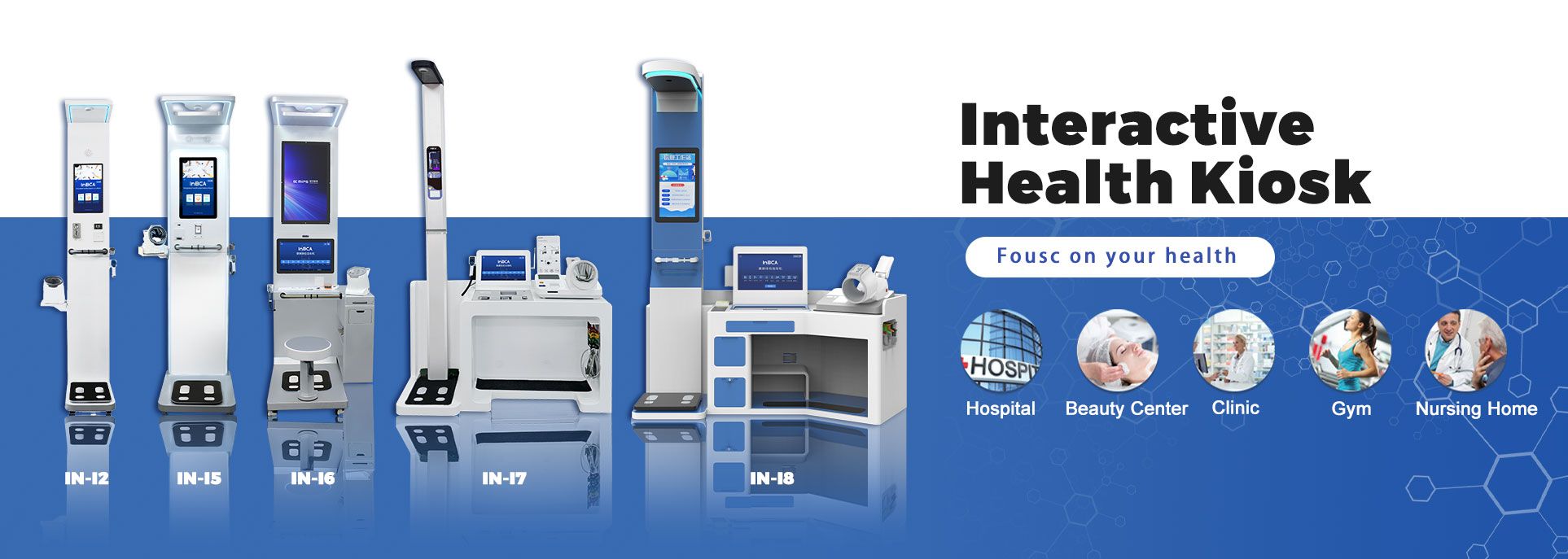
An Interactive Health Kiosk is a self-service medical device that integrates health monitoring, data management, and intelligent services. Users do not need to make an appointment or wait in line. Simply standing in front of the kiosk and following the on-screen instructions, they can complete a range of physiological measurements within just a few minutes. These typically include basic indicators such as height, weight, blood pressure, heart rate, blood oxygen saturation, and body temperature. More advanced kiosks can also measure body fat percentage, visceral fat level, muscle mass, bone density, and even assess heart age and cardiovascular disease risk.
Once the measurements are completed, the kiosk generates an easy-to-understand health report in real time, which can be displayed on the screen or sent to the user via QR code push. At the same time, the data can be automatically synchronized with hospital electronic medical record systems or corporate health management platforms, enabling long-term tracking and trend analysis. For healthcare institutions, interactive health kiosks help triage outpatient traffic effectively, freeing nurses and doctors from tedious basic measurement tasks so they can focus on more complex diagnosis and treatment.
The application scenarios of interactive health kiosks continue to expand. In hospitals, they are used for self-service registration, fee payment, and admission check-in. In corporate settings, they are placed in break rooms or rest areas to encourage employees to pay attention to their health during spare moments. In community pharmacies or nursing homes, they can serve as physical nodes for telemedicine, helping patients conduct video consultations with doctors in the cloud. In public places such as airports, shopping malls, and large factories, they also play a role in convenient health screening.