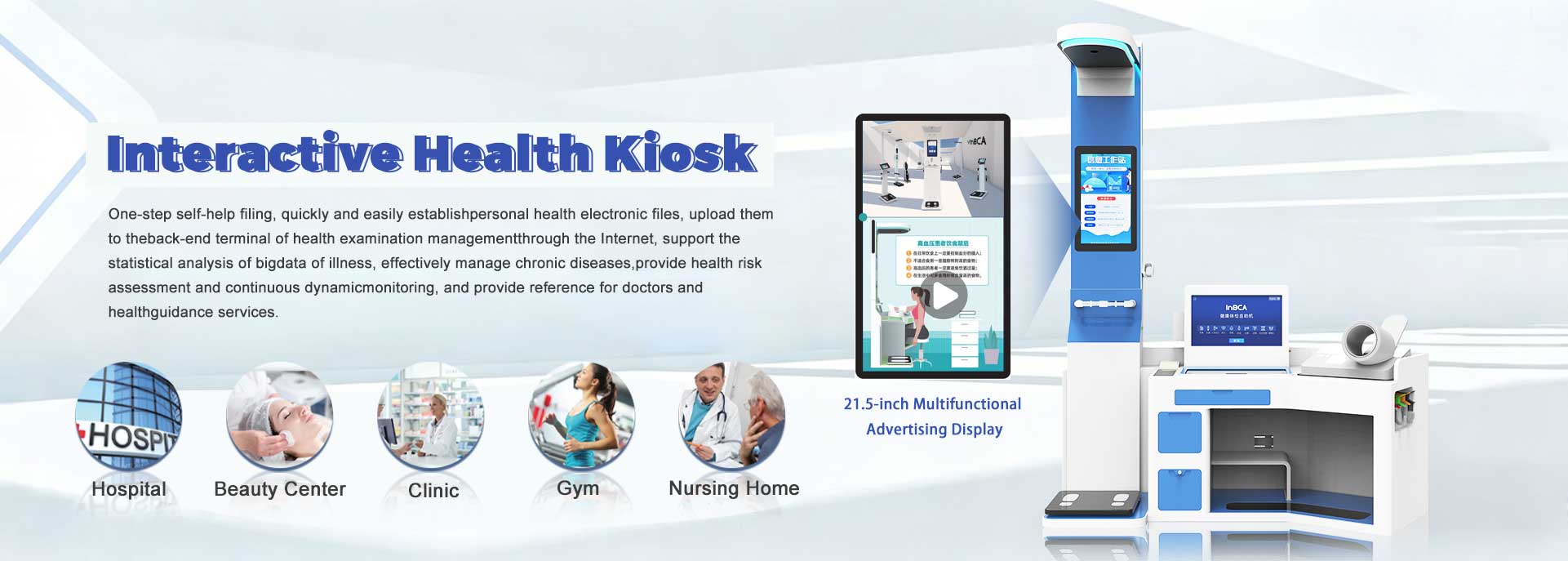
Long waiting times have long been one of the biggest frustrations for patients in hospitals and clinics worldwide. But a simple, smart solution is quietly making a difference: the interactive health kiosk.
In pilot programs across several large urban hospitals, these self-service stations have reduced average patient wait times by nearly 50%. How? By taking over routine but time-consuming tasks that traditionally required a nurse or receptionist.
What the Interactive Health Kiosk does:
-
Pre-check-in: Patients can register using an ID card or health insurance card in under 30 seconds.
-
Vital signs measurement: The kiosk automatically records blood pressure, temperature, heart rate, height, weight, and BMI.
-
Symptom intake: A touchscreen questionnaire collects chief complaints and basic medical history.
-
Triage assistance: Based on the data, the system suggests an appropriate urgency level (e.g., routine, urgent, emergency).
-
Direct data transfer: All information is instantly sent to the hospital’s electronic health record (EHR) system and the attending physician’s dashboard.
The results speak for themselves.
In a three-month trial at a 1,200-bed tertiary hospital, average waiting time before consultation dropped from 47 minutes to 23 minutes. Nurses previously spent up to 15 minutes per patient on manual intake; the kiosk reduced that to under 3 minutes. Patient satisfaction scores rose by 34%, and frontline medical staff reported significantly less repetitive stress.
Why it works.
The Interactive Health Kiosk does not replace medical professionals—it frees them. Doctors and nurses can focus on diagnosis, treatment, and patient communication instead of paperwork and basic measurements. Meanwhile, patients feel more in control, less anxious, and better informed before even seeing a clinician.
Limitations and considerations.
Critics note that Interactive Health Kiosks are less suitable for elderly patients or those with low digital literacy. However, most deployments include a hybrid model: self-service for willing users, and traditional service desks for those who need assistance. Language barriers are also being addressed with multilingual interfaces, including voice guidance.
The bottom line.
Interactive health kiosks are not futuristic fantasies. They are practical, proven tools already cutting wait times and improving patient flow in real-world hospitals. As technology improves and costs decline, their role in healthcare is expected to grow rapidly—making the dreaded long wait a thing of the past.