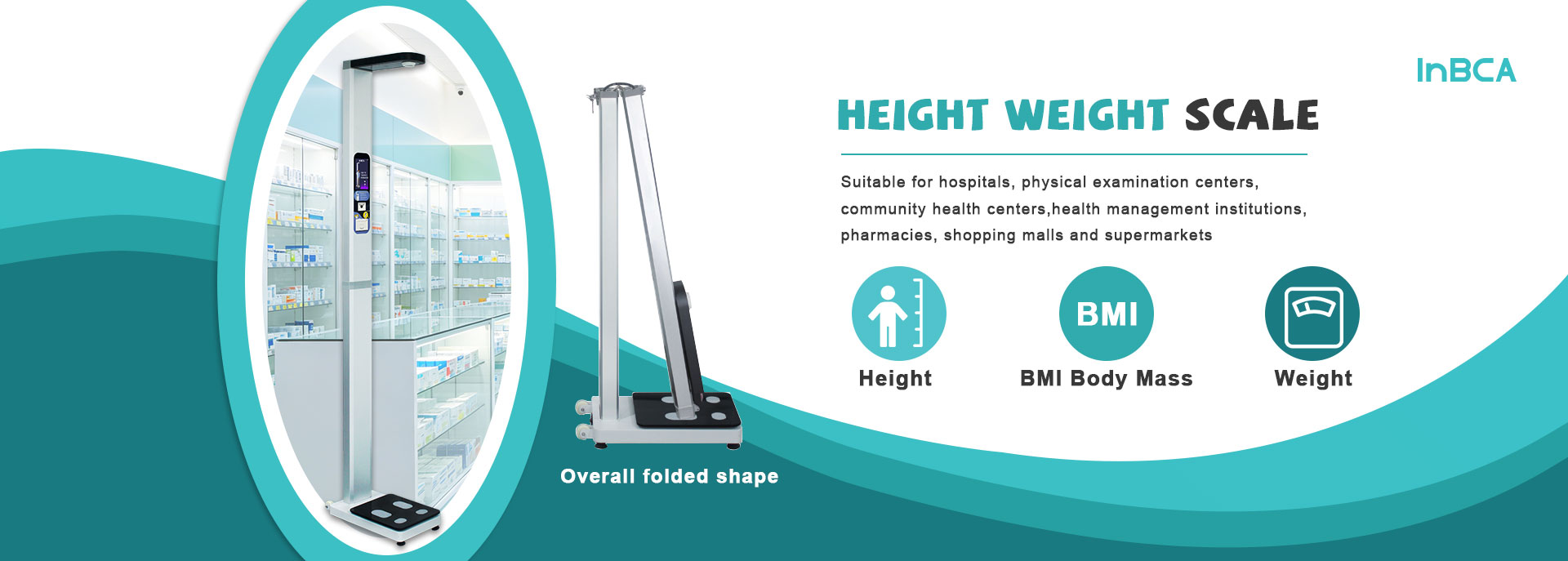
In the landscape of modern health management, the height and weight scale, seemingly the most basic device, holds the core code to health assessment. From routine physical examinations in hospital outpatient departments to daily screenings in community health centers, and long-term monitoring in health management institutions, a professional height and weight scale is always the first and most critical step in understanding our physical condition.
Many people still view the height and weight scale as a simple tool for "measuring height and weight," overlooking the health significance behind it. The core value of a qualified height and weight scale goes far beyond two numbers:
- Accurate Basic Data Collection: Using ultrasonic/optical non-contact technology for height measurement and high-precision pressure sensors for weight measurement, it minimizes errors to lay a solid foundation for all subsequent health assessments.
- Synchronous BMI Calculation: It automatically generates the Body Mass Index (BMI) based on height and weight data, quickly determining if a user’s weight falls within a healthy range. This serves as the first line of defense for screening issues like obesity or underweight, and is also a key reference for assessing the risk of chronic diseases such as diabetes and hypertension.
- An Anchor for Subsequent Health Management: Dynamic changes in height and weight data are core references for doctors to formulate intervention plans and for users to adjust their lifestyles, whether for monitoring children’s growth and development, following up on chronic diseases in adults, or assessing the physical fitness of the elderly.