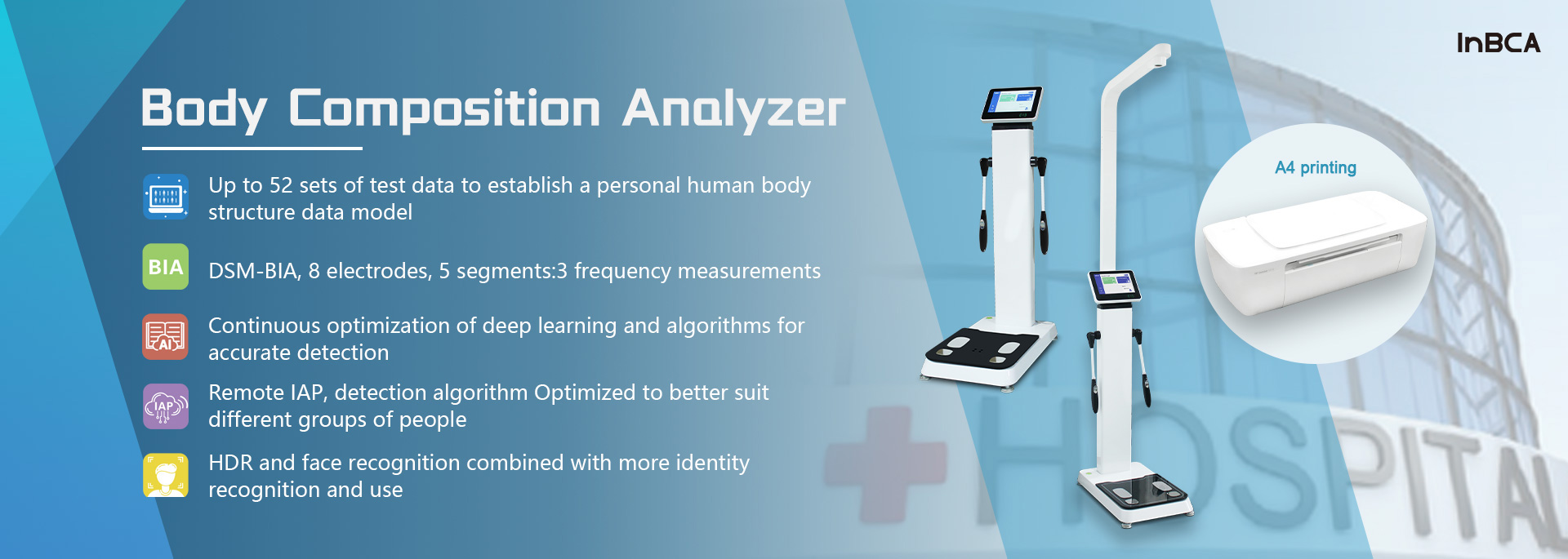
A body composition analyzer is a medical and health device that uses bioelectrical impedance analysis (BIA) technology to quickly and non-invasively measure body composition. It is widely used in hospitals, fitness centers, research institutions, and home health management. The following provides a detailed introduction from five aspects: principle, function, application scenarios, usage precautions, and brand selection:
I. Working Principle
The body composition analyzer introduces a weak electric current (virtually imperceptible to the human body) into the body. Utilizing the impedance differences of different tissues (such as muscle, fat, and bone) to the current, and combining parameters such as weight, height, age, and gender, it calculates indicators such as body fat percentage, muscle mass, water content, skeletal muscle mass, and visceral fat area. Some high-end models employ multi-frequency segmental analysis, which can independently analyze the composition of the limbs and trunk, improving measurement accuracy.
II. Core Functions
Basic Indicator Measurement
Weight, BMI (Body Mass Index), Basal Metabolic Rate (BMR), Body Fat Percentage, Waist-to-Hip Ratio, Visceral Fat Area, etc.
Muscle Mass, Skeletal Muscle Mass, Lean Mass, Protein Content, Inorganic Salt (Mineral) Content.
Intracellular fluid, extracellular fluid, and total water content.
Health Assessment and Risk Warning
Obesity Diagnosis: Comprehensive assessment of obesity type (e.g., abdominal obesity) based on BMI, body fat percentage, waist-to-hip ratio, and visceral fat area; prediction of chronic disease risks such as diabetes, hypertension, and arteriosclerosis.
Nutritional Status Analysis: Identification of malnutrition or excess through protein and mineral content; guidance for scientific diet.
Edema and Fluid Balance: Monitoring extracellular water ratio; assessment of fluid retention in patients with kidney disease, heart failure, and cirrhosis.
Muscle and Bone Health: Analysis of skeletal muscle mass; prevention of sarcopenia; assessment of bone mineral content; aiding in the diagnosis of osteoporosis.
Personalized Health Management
Generation of nutritional recommendations and exercise plans based on measurement results; assistance in setting goals for fat loss, muscle gain, or weight control.
Dynamic monitoring of changes in body composition; adjustment of intervention plans (e.g., postoperative nutritional support, chronic disease management).
III. Application Scenarios
Clinical Medicine
Nephrology: Monitoring dry weight of dialysis patients and assessing fluid balance.
Endocrinology: Diagnoses metabolic syndrome and manages body fat distribution in diabetic patients.
Oncology: Assesses nutritional status in cancer patients and prevents cachexia.
Rehabilitation Medicine: Tracks muscle recovery and optimizes rehabilitation training.
Fitness and Exercise Science: Fitness instructors adjust training plans based on changes in muscle mass and body fat percentage.
Athletes monitor body composition to optimize athletic performance.
Public Health and Research:
Epidemiological Studies: Analyzes population obesity trends and health risks.
Drug Trials: Evaluates the effects of drugs on body composition.
Family Health Management: Regular self-testing by ordinary users to track health data and prevent chronic diseases.
IV. Precautions
Contraindications:
Those with pacemakers or metal implants (such as plates or nails).
Those with limb defects or those unable to properly contact the electrodes.
Pregnant women and women during menstruation (changes in body water may affect results).
Preparation Before Measurement:
Avoid eating and drinking for 2 hours before measurement, and empty your bladder and bowels.
Wear light clothing and remove watches, jewelry, and other metal objects.
Avoid strenuous exercise or immediate measurement after showering.
Environmental Requirements:
Temperature 10-40℃, Humidity 30%-75% (non-condensing).
V. Brand and Model Recommendations
InBody
Features: A leading global brand, employing multi-frequency bioelectrical impedance analysis (BIA) technology for high measurement accuracy and support for segmental analysis.
Models: InBody 770 (high-end clinical model), InBody 270 (portable model), InBody S10 (for bedridden patients).
Application Scenarios: Hospitals, professional fitness centers, research institutions.
Visbody
Features: Combines 3D human body scanning technology to provide body posture assessment and composition analysis.
Suitable Scenarios: High-end fitness clubs, beauty and anti-aging centers.
Kejin
Features: High cost-performance ratio, supports adult/child report generation, provides nutrition and exercise prescriptions.
Suitable Scenarios: Community hospitals, family health management.
ZHAIKER
Features: Affordable price, comprehensive functions, suitable for individual users.
Suitable Scenarios: Home use, small gyms.
VI. Purchase Recommendations
Accuracy Requirements: For clinical or research use, choose a multi-frequency segmental analysis model (e.g., InBody 770); for home use, a basic model (e.g., Home Gym) is suitable.
Functional Expansion: For those needing to print reports or connect to health management software, choose a model equipped with a management system.
Budget Range: High-end models cost approximately 100,000-300,000 RMB; mid-to-low-end models cost approximately 10,000-50,000 RMB.